
Master of ScienceSystems Engineering
Develop advanced expertise in designing and managing complex systems with a graduate degree that prepares you for leadership in systems integration and engineering.

Since it was developed in 1999 from a proposal to the Boeing Company to provide off-campus Systems Engineering graduate education to Boeing Engineers and their suppliers worldwide, our program has grown exponentially, becoming a well-established in-person and online graduate program, with MS and Ph.D. degree offerings.
General Information
Designed over two decades ago, the Missouri S&T Systems Engineering graduate program provides students with a transdisciplinary perspective that enables an integrative approach to the creation of systems solutions, using systems principles and concepts along with evidence-based methodologies. Systems Engineers must provide that change as technologies and systems environments evolve. These solutions apply to multiple industries and influence in all aspects of society — from transportation and health care to education, agriculture, and services. Missouri S&T’s adaptive graduate programs train Engineers to find solutions that work for every aspect.
Today, engineering projects call for knowledge of a transdisciplinary and top-down perspective in architecting and deploying adaptive systems solutions. Missouri S&T’s modular architecture for its Master of Science (M.S) degree program requires successfully completing six core courses and four approved elective courses, preferably from systems engineering and program management-based graduate certificates. Hence, it is possible to have two graduate certificates and an M.S. degree while pursuing a Systems Engineering master’s degree at Missouri S&T.
The modular architecture of the program enables students to customize their degree based on his/her professional needs. Most popular tracks are Digital Engineering, Model Based Systems Engineering and Computational Intelligence. Missouri S&T has an academic equivalency arrangement with International Council on Systems Engineering INCOSE enabling students to bypass the knowledge exam on their path to becoming an Associate Systems Engineering Professional (ASEP) or Certified Systems Engineering Professional (CSEP). This synchronous hybrid program, graduated more than 740 master students since its inception in 2000. https://emse.mst.edu/
Thesis & Non-Thesis Tracks
Core Courses
Required of all students in the MS program
- SYS ENG 5101: Systems Engineering and Analysis
- SYS ENG 6102: Information Based Design
- SYS ENG 6104: Systems Architecting
- SYS ENG 6196: Systems Engineering Capstone
- SYS ENG 6542: Model Based Systems Engineering
- SYS ENG 5106: Evaluation, Verification and Test
Elective Courses Sample Lists
Students can take the four elective courses based on their selection of a second graduate certificate or their own choices as long as they are approved by their advisor.
Digital Engineering
- SYS ENG 6239: Smart Engineering System Design
- SYS ENG 6321: Modeling Complex Systems
- SYS ENG 6543: Digital Engineering
- SYS ENG 5281: Introduction to Probabilistic Risk Assessment
Computational Intelligence
- SYS ENG 5211: Computational Intelligence
- SYS ENG 5212: Introduction to Neural Networks and Applications
- SYS ENG 6213: Deep Learning
- SYS ENG 6214: Clustering Algorithms
Model Based Systems Engineering
- SYS ENG 6110: Optimization under Uncertainty
- SYS ENG 6239: Smart Engineering System Design
- SYS ENG 6412: Mathematical Programming
- SYS ENG 5281: Introduction to Probabilistic Risk Assessment
Specialization Track Areas
Specialization tracks and courses provide you with the ability to address your specific education needs in the context of the overall systems engineering program. One of the following graduate certificates may be substituted for a specialization track with the permission of the program director:
Contact Information
Kimberly Lindstrom
Certificate, MS & PhD Students
231 Engineering Management
Opportunities & Resources
Graduate Resources
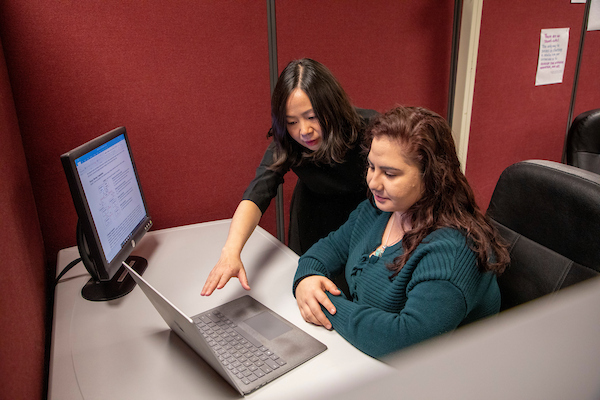
Access academic policies, deadlines funding information, forms, and support services designed for graduate student success. View grad resources
Application Fee Waiver Opportunities
Attend an information session to learn how you can qualify for a graduate application fee waiver. Join a session
Follow Engineering Management and Systems Engineering